



Would you like a quick overview?
AI summary
Key points at a glance
Three steps in a single stitch
Three steps in one go: join, trim, and neaten. Whether the seam matches the project depends on the stitch and fabric you choose.Sewing Machine Accessory
The overlock machine complements a sewing machine. None of the three machines featured here produces classic cover stitches.Ease of Threading and Fabric Settings
Threading the air thread makes it easier for the looper threads to pass through. Fabric adjustments and a seam test are still required.Equipment for Three Budgets
Three examples illustrate the difference between basic features, automatic threading, and additional convenience features.Are you sewing a shirt, and the inner seam doesn’t look quite like the one on your favorite piece from your closet? This is exactly where an overlock sewing machine can help. It finishes fabric edges quickly and creates seams suitable for stretchy materials. But not every sewing project requires an overlock—and the higher price tag is worth it only if you actually use the additional features.
In this guide, we’ll show you what an overlock machine can do, when it’s worth the investment, and what to look for when choosing one. To that end, we’ll introduce you to three models from our lineup: the Brother 2104D, the Brother Airflow 3000, and the BERNINA L 660.
We are MAKEMA, your retailer for sewing and embroidery machines. You can purchase the three overlock machines featured here directly from us. For each model, you’ll find a product card showing the current price and a button to purchase it in our MAKEMA store.
What is a serger, and what can it do?
An overlock machine works along the fabric edge: Its blade trims the seam allowance while needles and looper form the seam and enclose the open edge with threads. With a suitable joining seam, you can sew, trim, and finish the edge in a single pass. You can also finish edges individually.
This is especially handy for clothing made from jersey or sweatshirt fabric. But even woven fabrics that fray benefit from a bound edge. However, a neatly finished edge and a durable seam are two different tasks: Choose the stitch that suits the fabric and the intended use.
- 4-thread overlock: a commonly used method for sewing and finishing at the same time, for example, in many jersey projects.
- 3-thread overlock: often used for finishing individual edges. Whether it’s suitable as a joining seam depends on the project.
- Rolled hem: a narrow edge finish, suitable for lightweight fabrics. It is not a substitute for a classic folded T-shirt hem.
Overlock, Sewing Machine, and Cover Stitch: The Differences
If you’re looking for your first machine, you’ll usually start with a sewing machine. It handles the versatile tasks on the fabric. The overlocker complements it when you want to finish edges quickly and neatly. The so-called overlock stitch on a sewing machine isn’t a complete equivalent: the typical combination of a cutter and looper threads is missing on a standard household sewing machine.
| Machine Type | Typical Strength | Key Limitation |
|---|---|---|
| Sewing Machine | Straight stitches, zippers, buttonholes, topstitching, and many hems | Trimming and neatening are usually separate steps |
| Overlock | Trim and neaten fabric edges; create matching elastic seams | No traditional buttonholes or cover stitch hems |
| Cover stitch machine | Elastic hems with parallel visible stitches and interlaced threads on the underside | A pure cover stitch machine does not perform the full overlock edge finishing |
The term “coverlock” is used differently in the retail sector. Therefore, check the actual stitch types: Some listings refer to a pure cover stitch machine, while others refer to a combination of overlock and cover stitch that requires modification. The three models in this article are pure overlock machines.
When is an overlock machine worth it for you?
It’s less about your level of experience and more about your everyday sewing routine. If you regularly sew shirts, sweatshirts, or children’s clothing, you’ll encounter the same edge-finishing and joining tasks time and again. An additional machine can make these processes easier. If you mainly do small repairs, sew bags, or make occasional alterations, a good sewing machine is often the more important purchase.
- It can be worth it if: you frequently sew clothing, want to neaten multiple seam allowances consistently, or regularly work with stretch fabrics.
- You can wait for now: You rarely sew, have limited space, or want to learn basic sewing techniques first.
- Another priority: You’re mainly looking to create the typical T-shirt hem with two or three parallel seams. In that case, check out the coverstitch function and the capabilities of your sewing machine.
Even an overlock machine for beginners takes practice. The advantage of a user-friendly model is that certain steps may come more easily to you—though it doesn’t take the work out of guiding the fabric or selecting the right settings.
Which features will be useful to you in everyday sewing?
Differential feed for different fabrics
With differential feed, the two feed mechanisms can pull the fabric at different rates. This helps compensate for unwanted stretching or puckering and, depending on the setting, can also create desired effects. There’s no one-size-fits-all setting for every jersey fabric. Start with the recommendation in the manual and test the seam on a scrap of your actual fabric.
Manual threading or air threading?
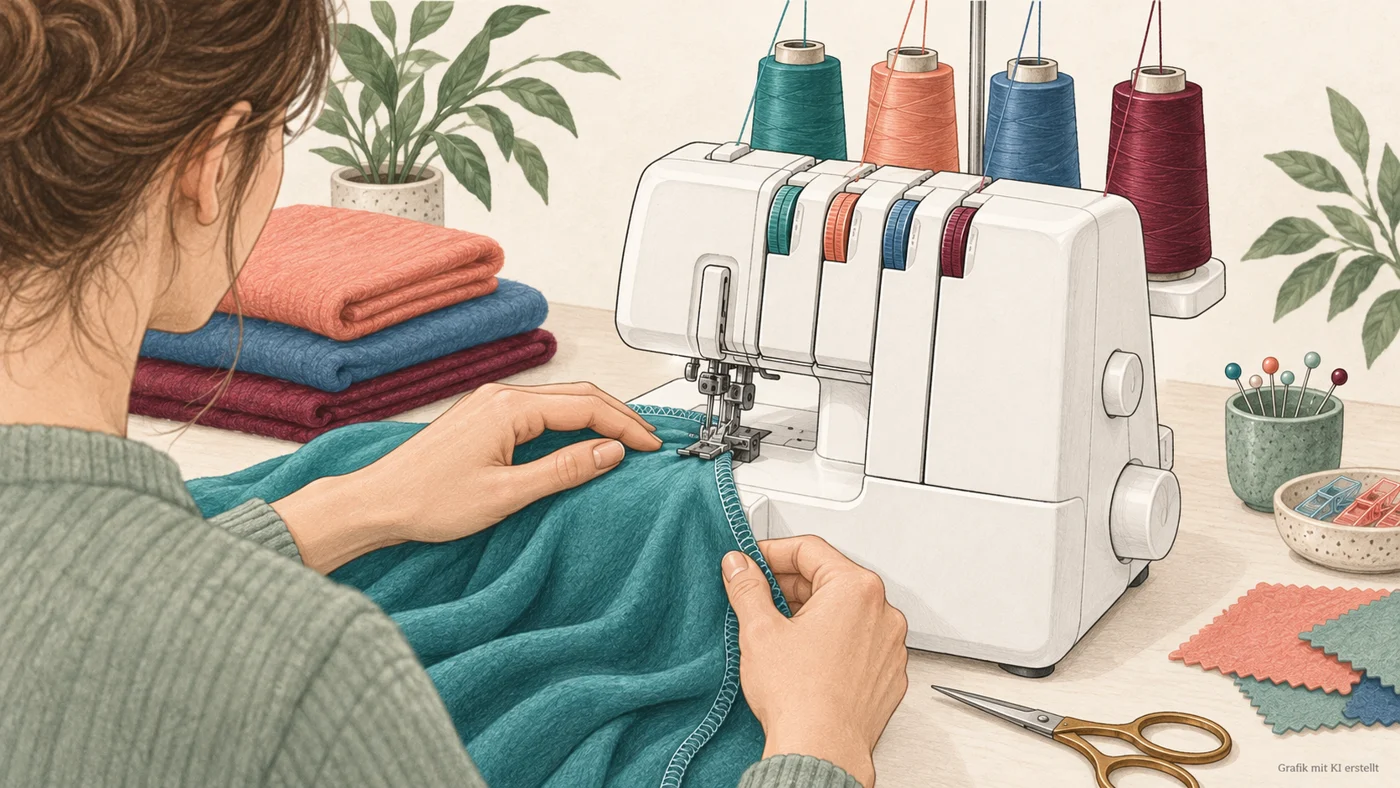
Color-coded thread paths and looper threading aids make manual setup easier. An overlock machine with an air threader guides the looper threads through designated channels. This is useful if you find threading difficult or if you change colors frequently. The needle threads are separate; a dedicated needle threader may be available for this purpose.
Example from the manufacturer’s video: Brother demonstrates the Airflow 3000’s looping system. The video illustrates this feature; it is not a comparison test.
Control, Space, and Budget
Assess how well you can sew slowly and guide the fabric. Easily accessible controls, comfortable lighting, adjustable presser foot pressure, and space next to the needle may be more important than the highest stitches per minute. A knee lever or needle stop is especially useful if you frequently reposition the fabric. Also, plan for thread, suitable needles, instruction, and space for a second machine.
Three Overlock Machines for Different Budgets
The following selection covers three levels of features. It is not a comprehensive market comparison or a ranking. All three models have differential feed; differences include thread count, threading, and ease of use.
| Feature | Brother 2104D | Brother Airflow 3000 | BERNINA L 660 |
|---|---|---|---|
| Price | 329 € | 899 € | 2.299 € |
| Threads | 3 or 4 | 2, 3, or 4 | 2, 3, or 4 |
| Gripper | Manual with bottom-grip threading aid | Electronic Threader | One-Step Threader |
| Comfort | Color markings, free-arm, LED | Needle Threader, Safety Stop | Knee lever, needle stop, mtc |
| Cover Stitch | No | No | No |
Prices are provided for budgeting purposes, include German VAT, and do not include any applicable shipping costs. Promotions, shopping cart discounts, and availability are subject to change. The information on the respective product page is authoritative.
Brother 2104D: if you need the basics
The 2104D demonstrates that even a budget-friendly overlock machine can offer key basic functions: 3- and 4-thread seams, differential feed, and rolled hem. The lower looper threading aid helps you with manual setup. The free arm is an additional feature for circular pieces, provided their circumference fits within the machine.
Pros: a comparatively low entry-level price for essential overlock functions. Cons to consider: no automatic threading and no 2-thread stitches. If threading is your biggest hurdle, try it out yourself before buying.
Technical details from the manufacturer
Brother Airflow 3000: when easy threading matters
The Airflow 3000 focuses on electronically assisted looper air threading and a separate convenience needle threader. It handles two, three, or four threads. The Brother also features a safety stop when the covers are open or the presser foot is raised.
Pros: additional threading assistance without the price tag of the BERNINA featured here. Cons to consider: the extra cost compared to a manually threaded machine. Air threading does not provide automatic thread tension; you’ll still need to select the appropriate settings.
Technical details from the manufacturer
BERNINA L 660: when you want to make many tasks more convenient
The L 660 combines loop-type air threading and a needle threader with additional control functions. The knee lever raises the presser foot while lowering the feed dog. Programmable needle stop and mtc thread control assist with positioning and fine-tuning the edge wrapping; the extension table is included.
Pros: Convenience for repetitive tasks and additional control. Cons to consider: the significantly higher price and whether you’ll use these features frequently. This model also does not replace a coverstitch machine.
You can find more information about the series’ classification in the existing MAKEMA article on the BERNINA L6 series. · Technical details from the manufacturer
How to Make the Right Decision
- Define your project: Are you working on edges and seams, or mainly on elastic hems?
- Bring your own fabrics: Try your own jersey and sweatshirt fabric, for example, instead of relying solely on the prepared demonstration fabrics.
- Thread the machine yourself: Compare manual threading and air threading. Also pay attention to access to the needles.
- Sew slowly: Check the machine’s guidance, visibility, and how it handles transitions over existing seams.
- Check your total budget: Consider the machine, necessary materials, workspace, and training all together.
For an initial overview of the available models, check out the overlock machines at MAKEMA . Which machine is right for you depends on your projects and the tasks you want to make easier.

Frequently Asked Questions About Overlock Machines
Can an overlock machine replace my sewing machine?
Not for standard, versatile sewing tasks. You’ll still need the right features for buttonholes, zippers, and topstitching. An overlock machine is primarily a supplement for edge finishing.
Do I absolutely need an overlock machine to sew jersey?
No. With the right stretch stitches, the appropriate needle, and a test seam, you can complete many jersey projects on a regular sewing machine. An overlock machine can speed up repetitive tasks and produce a different seam appearance.
Is an overlock machine with an automatic threader a good choice for beginners?
Yes, if this feature makes it easier for you to get started and fits your budget. However, it’s not a requirement. What’s more important is that you understand how to thread the machine, operate it safely, and get help as you get started.
Can I sew the typical cover-stitch T-shirt hem with these three models?
No. The Brother 2104D, Brother Airflow 3000, and BERNINA L 660 are pure overlock machines. For a classic coverstitch, you’ll need a suitable coverstitch or combination machine.
Where can I find help with thread tension?
First, consult your model’s manual. To understand how the threads interact, you’ll find a separate guide on overlock thread tensionat sockshype. Always check the specific settings for differential feed and tension on the actual fabric; they aren’t universally applicable.
Sources and Editorial Classification
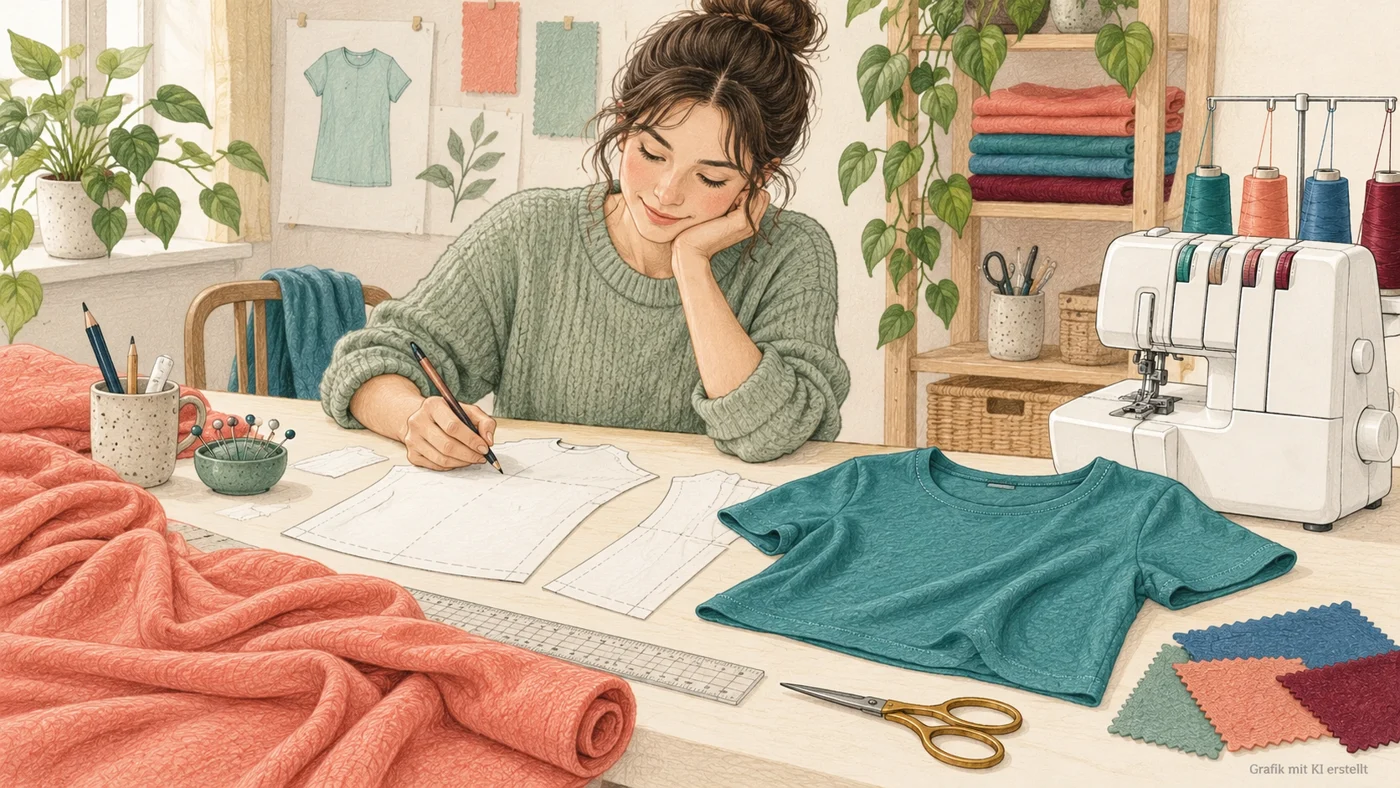
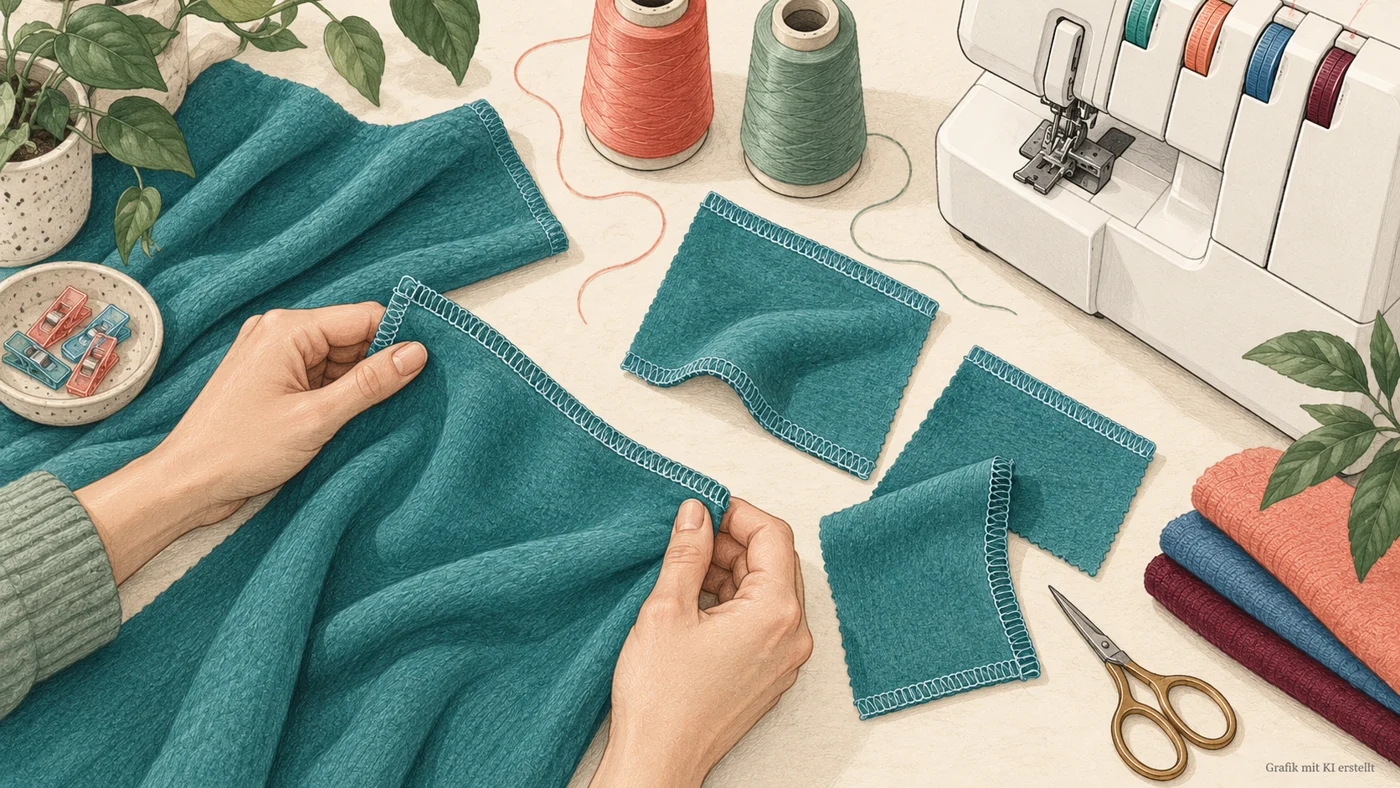
We compared the technical specifications with the manufacturer’s information and categorized the features based on different sewing needs. This article does not include our own hands-on testing; we did not measure stitch quality, noise level, or durability. You can find the featured machines in our MAKEMA Shop. As of October 9, 2026. The cover image is an AI-generated illustration of a general overlock sewing scenario and does not accurately depict any of the featured models.



This finally cleared up the difference between an overlocker and a coverstitch machine for me. I had assumed they could both do the usual T-shirt hems!
Such a useful overveiw 😊 Saving this for when I start on jersey tops!
I already have a sewing machine and have been wondering about adding an overlocker for clothing projects. The threading section is particularly helpful. I would like to try both manual and air threading before deciding. The reminder about room for a second machine made me smile too. My sewing table is already fairly crowded.